Observe the operating surface
Operators review belt tracking, photo-eye cleanliness, audible warnings, visible damage and chute occupancy before release. Any abnormal divert behavior is recorded with the destination and wave context.
Serviceability is designed around the shift pattern, critical sorter paths, technician access, remote-support rules and the evidence needed to return conveyors and divert modules to operation. The project team identifies which induction, merge, divert, recirculation and control faults can be isolated without stopping the complete outbound flow.
Response objectives are agreed by site and scope. They are not presented as universal guarantees, because travel, spare availability, access authorization and installed configuration alter the achievable recovery path. Availability targets are therefore stated as system availability % for the contracted subsystem set, not as site-wide uptime slogans.
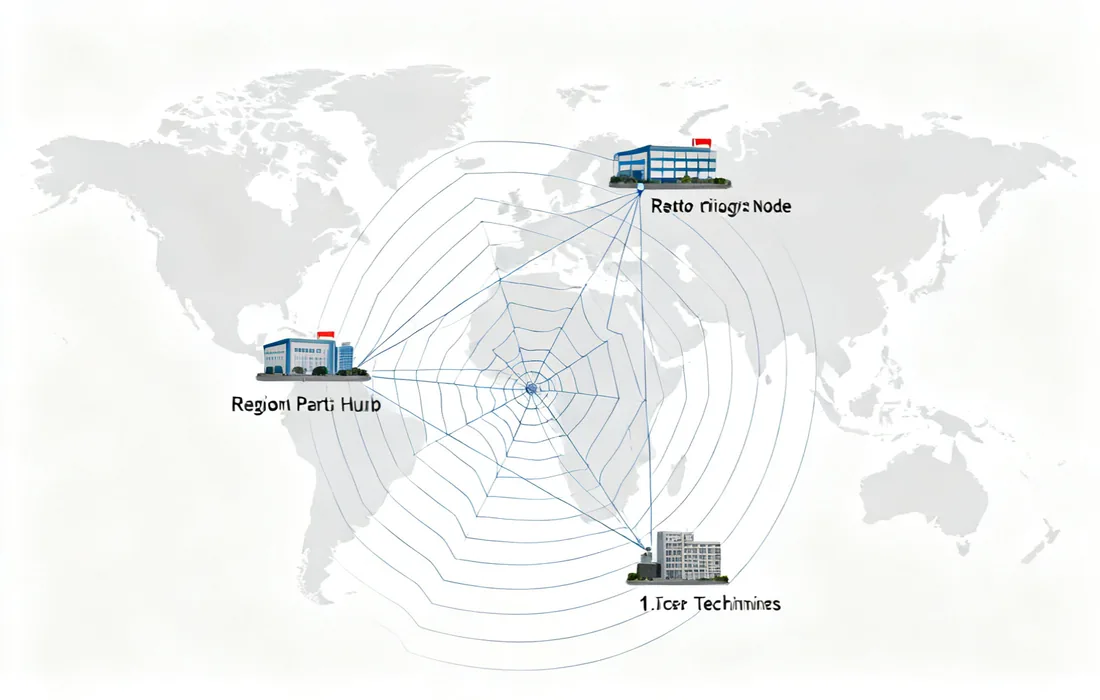
Each installed location receives a responsibility view rather than a colored world map that implies identical coverage everywhere. Remote diagnostics depends on approved access, retained WCS logs and a reachable controls layer. Regional intervention depends on skill availability, travel conditions and the correct service kit. Resident or scheduled site support is considered where production exposure justifies it.
The model also names the customer roles needed for safe access: the operations owner who releases the area, the controls contact who grants system access, and the maintenance contact who verifies isolation. This avoids a response clock starting before a technician can legally or safely enter the affected zone.
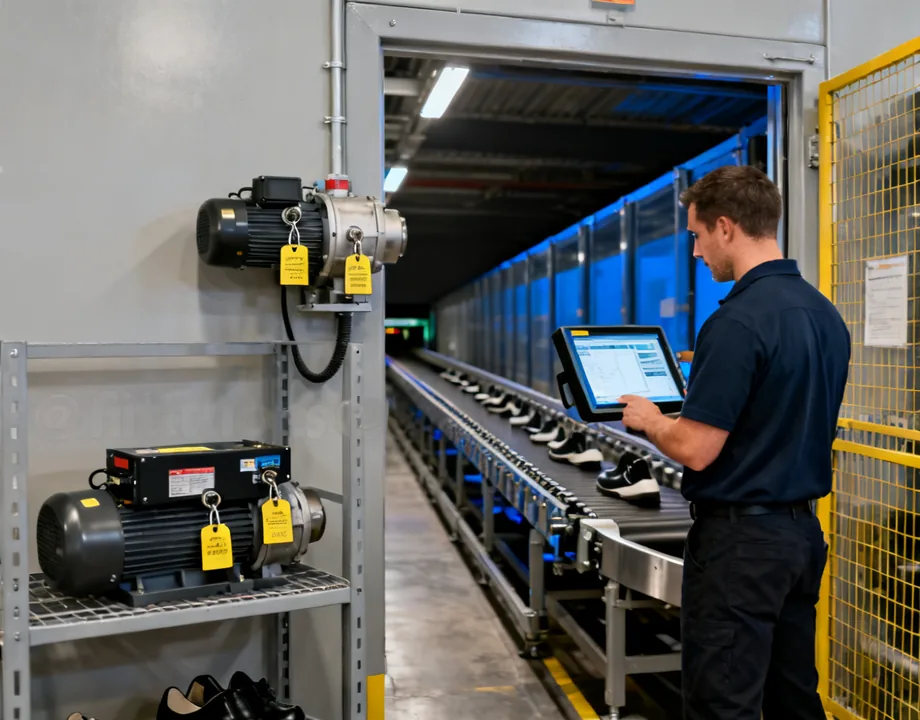
A calendar is the starting point, not the whole method. Task frequency is adjusted after operating hours, carton mix abrasiveness, divert cycle counts and fault history are reviewed.
Operators review belt tracking, photo-eye cleanliness, audible warnings, visible damage and chute occupancy before release. Any abnormal divert behavior is recorded with the destination and wave context.
Maintenance checks fasteners, shoe or cross-belt modules, safety devices, motor connections and consumable wear. Findings are compared with limits stated for the installed model and operating environment.
Selected e-stop, jammed-lane, communication-loss and blocked-chute cases are tested in a controlled window. The method avoids creating an uncontrolled hazard or injecting an exception into live outbound waves.
Recurring divert misses, recirculation spikes and recovery time are reviewed together. The task list, stock level or control rule is then revised with an owner and an effective date.
Criticality considers whether a failed item stops one lane, a merge point, a recirculation loop or the complete sorter. Lead time is reviewed alongside substitution, configuration and safe replacement requirements.
| Asset group | Operational exposure | Stocking question | Return-to-service evidence |
|---|---|---|---|
| Divert wear modules | Usually isolates one lane if parallel capacity has margin. | Shoe, belt and actuator use depends on duty cycle and carton abrasiveness. | Inspection, torque record and controlled divert test. |
| Photo eyes & scanners | May inhibit induction or reduce usable destinations when no approved substitute exists. | Confirm exact model, configuration file and validation skill before stocking. | Field verification under the applicable sensor validation plan. |
| Drive & accumulation units | Can create a delayed throughput constraint rather than an immediate stop. | Compare redundancy, belt wear and peak energy demand. | Electrical checks, handshake confirmation and observed accumulation cycle. |
| Controls and network | A shared controller or switch can affect multiple zones or every divert. | Keep versioned WCS/PLC configuration, compatible hardware and restore instructions together. | Backup restore, interface test and alarm-path confirmation. |
Boundary: spare recommendations cannot be finalized from sorter length alone. Installed configuration, redundancy, local import lead time, technician competence and production consequence must be known.
Provide the operating calendar, installed scope, critical path, allowed remote access and local maintenance capability. Add the longest tolerable interruption for each flow zone and any jurisdictional or labor constraints that shape site attendance.